
Sierra Leone Government approves PERSIF Project affiliation
“Sierra Leone is an example of good practice when it comes to Disease Surveillance and Response…”
Deputy Minister of Social Welfare
Deputy Minister of Social Welfare, Mohamed Haji Kellah described Sierra Leone as an example of good practice when it comes to Integrated Disease Surveillance and Response as well as COVID. The Deputy Minister made this statement at the Closing Ceremony of the Training of Trainers Workshop for Health Workers held on Friday, 28th October, 2022 at the main hall of the National School of Nursing in Freetown, in appreciation of the tremendous effort Sierra Leone has made in response to disease outbreaks following the ebola outbreak in 2014. The Closing Ceremony followed a two week event of training of two Health Training Institutions: Eastern Technical University (ETU) in Kenema (17th to 21st October, 2022) and College of Medicine and Allied Health Sciences (COMAHS) in Freetown (24 to 28th October, 2022), in the delivery of community-based services, including cross-border disease surveillance and response.
Mr. Kellah noted that if people want to know the impact of the ebola and the lessons learned from it, it is necessary to look at what the government of Sierra Leone did in the COVID. He expressed profound thanks to the think-tank in this venture, with special reference to the Presidential Advisory Group and NACOVAC, and everybody that was involved in the coroner fight. These groups he said, gave the sense, pull the researches together and advised; they as line ministries, followed in terms of policies and clinical practices. He acknowledged the fact that there were very many good people when it comes to lessons learned from the ebola. He evoked memories of Dr. Khan and Dr. Willoughby, who lost their lives during the ebola, and those still alive like Dr. M’bawa, Dr. Mhamed Vandy, Satti Kenneh and many others whom he referred to as the Champions of Ebola.
MOSW Deputy Minister, Mohamed Haji Kellah Delivering the Closing Address
In the light of the PERSIF Project, the Deputy Minister admitted that they as a ministry, were very fortunate to have good people and agencies that helped them put the concepts together and of course, the funding from the African Development Bank (AfDB). He pointed out that, the three key policy areas where the PERSIF Project is situated are: human capital development, strengthening health systems and enhancing and promoting the quality welfare of the most vulnerable people in the country. He described the College of Medicine and Allied Health Science (COMAHS) as a center of excellence when it comes to medical practice and nursing studies in the West African region. He thanked the African Development Bank on behalf of the government of Sierra Leone for funding the project and hoped that they would continue to support Sierra Leone to become a developing country. He extended gratitude to the trainers and those that have been trained in particular, and encouraged them to be professionals in terms of imparting the knowledge gained from the training.
David Edward Lahai, Coordinator of the PERSIF Project who the success of the project lies squarely on his shoulders said, the PERSIF Project was inaugurated in 2015 to address those shortfalls that were very prevalent at the outset of the ebola outbreak. The focus he said, was to put in place mitigation measures and muster resilience to effectively respond to future epidemic resurgence. He informed that the project gives priority to training, infrastructural development and community engagement, adding, the project is benefiting districts hugely affected by the ebola virus disease (EVD) especially ebola hotspots and cross-border communities. Mr. Lahai however confessed that the project may not have all the answers but it can do justice to what went wrong and why. He touched on some of the capacity gaps that needed to be enhanced to achieve the project objectives. It was on this perspective he said the COMAHS and ETU partnership unfolded. The PERSIF Project Coordinator highlighted some key reasons why the two institutions were chosen to spearhead the training. According Mr. Lahai, ETU is the only institution in the Eastern Province of Sierra Leone that trains nurses, and Kenema being one of the hotspots districts when ebola impacted the country heavily, and that, COMAHS is the institution where healthcare training is renowned in Sierra Leone. He went on to state that the Project is supporting both the educational aspect, which would form part of the academic curriculum, and the community based aspect, which eventually would be the nurses and health workers to ensure that the surveillance system is enhanced to have a better response system and capacity.
Chairman of the occasion, Mohamed Sheriff, who spoke on behalf of the Coordinator of the Project Fiduciary Management Unit (PFMU) said the PERSIF Project was founded as a result of the serious impact of the ebola in the three Mano River Union (MRU) countries: Guinea, Liberia and Sierra Leone. According to Mr. Sheriff, the health systems of these countries were put to test at the time of the outbreak. He explained how the response to the then outbreak triggered a national agenda, supported by a regional and global agenda with the objective of supporting the health systems and livelihood of the people of these countries, and how to move forward in terms of responding to future outbreaks. These efforts he said brought the African Development Bank (AfDB) to the fore as funders of the Project. He shed lights on the reasons why the project was put on hold for a while and brought back to effective operation and pointed out that, there is no way to impact the health systems in the country without supporting the human capital.
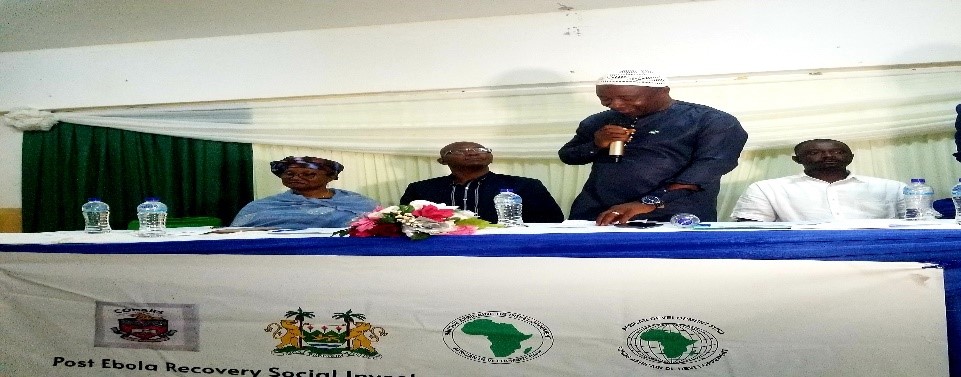
Deputy Minister of Social Welfare
Speaking on behalf of the Deputy Vice Chancellor of COMAHS, Dean of Faculty of Medical Laboratory, Science and Diagnostics, Associate Professor Isata Wurie spoke on the importance of the introduction of IDSR in Sierra Leone given the many diseases the country had and the challenges it faced before. He noted that because of the skills acquired in IDSR and lessons learned from the ebola, Sierra Leone was able to confront the COVID and sailed through. She shed lights on the response component of IDSR, the expertise in providing proactive interventions, the role of the frontline workers in all this and the effort of Sierra Leone in trying to implement the framework of the international health regulation which is now structured into a course for timely detection, proactive preventive and structure preventive intervention for Sierra Leone.
Prof. Haja Isata Wurie PFMU Mohamed Sheriff delivering opening address
COMAHS Head of Department of Community Health, Dr. Abdul Karim M’bawa said Sierra Leone faced a very serious challenge in terms of response when the ebola virus disease (EVD) broke out. He admitted that there were frontline workers in the field at the time but the EVD surprised them. As he put it, the IDSR Strategy was in place then but had not been developed in Africa. He disclosed that in order to strengthen the health capacity of the country, COMAHS developed modules in disease surveillance and response and integrated them into the curriculum. He acclaimed Sierra Leone as one of the countries that was less impacted by the COVID pandemic because of the resilience and experience of its healthcare workers in outbreaks. He emphasized from a World Health Organization (WHO) point of view that Sierra Leone and Tanzania are the only countries in Africa to develop an IDSR Strategy and Sierra Leone is the only country to train health workers in IDSR.
A cross-section of the trainees and students of Nursing School
Giving the vote of thanks, one of the beneficiaries of the training, Miatta Mansaray noted that the training was enlightening, informative and containing all the ingredients that would enable them to transfer skills to their students and frontline workers but appealed to the organizers to be conducting refresher trainings at intervals.
- Published in Uncategorized
DEPUTY SOCIAL WELFARE MINISTER SPEAKS AT THE IDSR CLOSING CEREMONY
“Sierra Leone is an example of good practice when it comes to Disease Surveillance and Response…”
Deputy Minister of Social Welfare
Deputy Minister of Social Welfare, Mohamed Haji Kellah described Sierra Leone as an example of good practice when it comes to Integrated Disease Surveillance and Response as well as COVID. The Deputy Minister made this statement at the Closing Ceremony of the Training of Trainers Workshop for Health Workers held on Friday, 28th October, 2022 at the main hall of the National School of Nursing in Freetown, in appreciation of the tremendous effort Sierra Leone has made in response to disease outbreaks following the ebola outbreak in 2014. The Closing Ceremony followed a two week event of training of two Health Training Institutions: Eastern Technical University (ETU) in Kenema (17th to 21st October, 2022) and College of Medicine and Allied Health Sciences (COMAHS) in Freetown (24 to 28th October, 2022), in the delivery of community-based services, including cross-border disease surveillance and response.
Mr. Kellah noted that if people want to know the impact of the ebola and the lessons learned from it, it is necessary to look at what the government of Sierra Leone did in the COVID. He expressed profound thanks to the think-tank in this venture, with special reference to the Presidential Advisory Group and NACOVAC, and everybody that was involved in the coroner fight. These groups he said, gave the sense, pull the researches together and advised; they as line ministries, followed in terms of policies and clinical practices. He acknowledged the fact that there were very many good people when it comes to lessons learned from the ebola. He evoked memories of Dr. Khan and Dr. Willoughby, who lost their lives during the ebola, and those still alive like Dr. M’bawa, Dr. Mhamed Vandy, Satti Kenneh and many others whom he referred to as the Champions of Ebola.
MOSW Deputy Minister, Mohamed Haji Kellah Delivering the Closing Address
In the light of the PERSIF Project, the Deputy Minister admitted that they as a ministry, were very fortunate to have good people and agencies that helped them put the concepts together and of course, the funding from the African Development Bank (AfDB). He pointed out that, the three key policy areas where the PERSIF Project is situated are: human capital development, strengthening health systems and enhancing and promoting the quality welfare of the most vulnerable people in the country. He described the College of Medicine and Allied Health Science (COMAHS) as a center of excellence when it comes to medical practice and nursing studies in the West African region. He thanked the African Development Bank on behalf of the government of Sierra Leone for funding the project and hoped that they would continue to support Sierra Leone to become a developing country. He extended gratitude to the trainers and those that have been trained in particular, and encouraged them to be professionals in terms of imparting the knowledge gained from the training.
David Edward Lahai, Coordinator of the PERSIF Project who the success of the project lies squarely on his shoulders said, the PERSIF Project was inaugurated in 2015 to address those shortfalls that were very prevalent at the outset of the ebola outbreak. The focus he said, was to put in place mitigation measures and muster resilience to effectively respond to future epidemic resurgence. He informed that the project gives priority to training, infrastructural development and community engagement, adding, the project is benefiting districts hugely affected by the ebola virus disease (EVD) especially ebola hotspots and cross-border communities. Mr. Lahai however confessed that the project may not have all the answers but it can do justice to what went wrong and why. He touched on some of the capacity gaps that needed to be enhanced to achieve the project objectives. It was on this perspective he said the COMAHS and ETU partnership unfolded. The PERSIF Project Coordinator highlighted some key reasons why the two institutions were chosen to spearhead the training. According Mr. Lahai, ETU is the only institution in the Eastern Province of Sierra Leone that trains nurses, and Kenema being one of the hotspots districts when ebola impacted the country heavily, and that, COMAHS is the institution where healthcare training is renowned in Sierra Leone. He went on to state that the Project is supporting both the educational aspect, which would form part of the academic curriculum, and the community based aspect, which eventually would be the nurses and health workers to ensure that the surveillance system is enhanced to have a better response system and capacity.
Chairman of the occasion, Mohamed Sheriff, who spoke on behalf of the Coordinator of the Project Fiduciary Management Unit (PFMU) said the PERSIF Project was founded as a result of the serious impact of the ebola in the three Mano River Union (MRU) countries: Guinea, Liberia and Sierra Leone. According to Mr. Sheriff, the health systems of these countries were put to test at the time of the outbreak. He explained how the response to the then outbreak triggered a national agenda, supported by a regional and global agenda with the objective of supporting the health systems and livelihood of the people of these countries, and how to move forward in terms of responding to future outbreaks. These efforts he said brought the African Development Bank (AfDB) to the fore as funders of the Project. He shed lights on the reasons why the project was put on hold for a while and brought back to effective operation and pointed out that, there is no way to impact the health systems in the country without supporting the human capital.
Speaking on behalf of the Deputy Vice Chancellor of COMAHS, Dean of Faculty of Medical Laboratory, Science and Diagnostics, Associate Professor Isata Wurie spoke on the importance of the introduction of IDSR in Sierra Leone given the many diseases the country had and the challenges it faced before. He noted that because of the skills acquired in IDSR and lessons learned from the ebola, Sierra Leone was able to confront the COVID and sailed through. She shed lights on the response component of IDSR, the expertise in providing proactive interventions, the role of the frontline workers in all this and the effort of Sierra Leone in trying to implement the framework of the international health regulation which is now structured into a course for timely detection, proactive preventive and structure preventive intervention for Sierra Leone.
Prof. Haja Isata Wurie PFMU Mohamed Sheriff delivering opening address
COMAHS Head of Department of Community Health, Dr. Abdul Karim M’bawa said Sierra Leone faced a very serious challenge in terms of response when the ebola virus disease (EVD) broke out. He admitted that there were frontline workers in the field at the time but the EVD surprised them. As he put it, the IDSR Strategy was in place then but had not been developed in Africa. He disclosed that in order to strengthen the health capacity of the country, COMAHS developed modules in disease surveillance and response and integrated them into the curriculum. He acclaimed Sierra Leone as one of the countries that was less impacted by the COVID pandemic because of the resilience and experience of its healthcare workers in outbreaks. He emphasized from a World Health Organization (WHO) point of view that Sierra Leone and Tanzania are the only countries in Africa to develop an IDSR Strategy and Sierra Leone is the only country to train health workers in IDSR.
A cross-section of the trainees and students of Nursing School
Giving the vote of thanks, one of the beneficiaries of the training, Miatta Mansaray noted that the training was enlightening, informative and containing all the ingredients that would enable them to transfer skills to their students and frontline workers but appealed to the organizers to be conducting refresher trainings at intervals.
- Published in PERSIF News Update
Minister of Social Welfare Leads Key Government Officials on Progress Assessment of PERSIF Project Sites
- Published in Uncategorized
Stakeholders Engagement on the Ownership and Sustainability of PERSIF Project Infrastructures Wraps Up
Today18th
- Published in Uncategorized
African Development Bank Concludes Second Quarter Supervision of the PERSIF Project
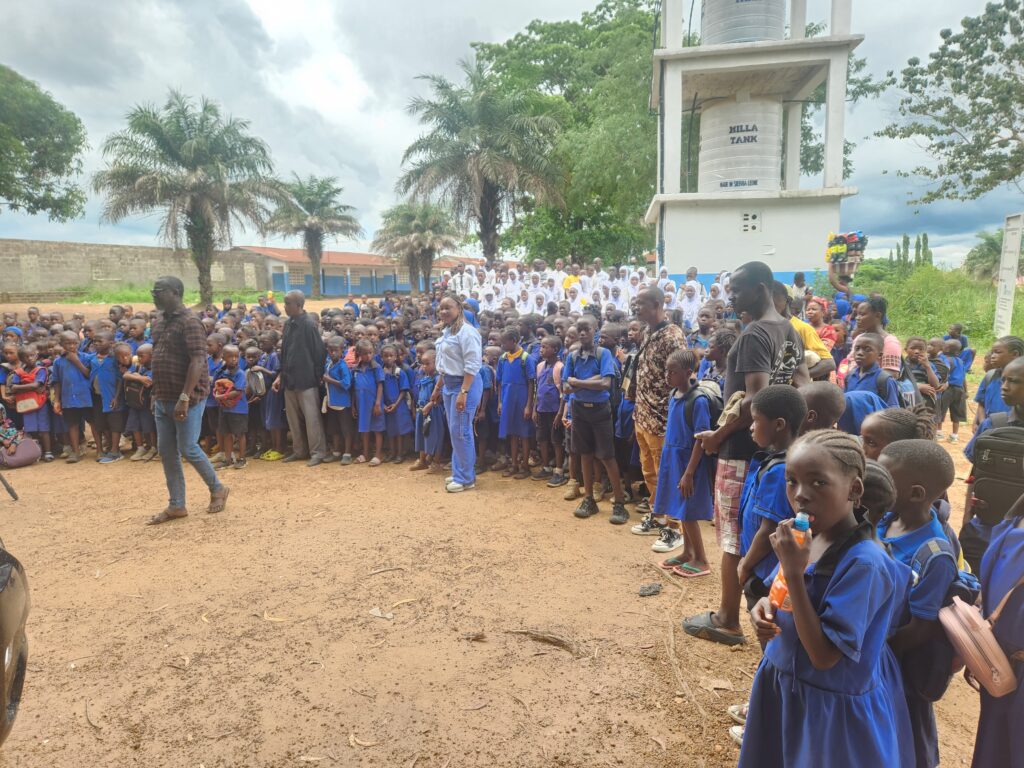
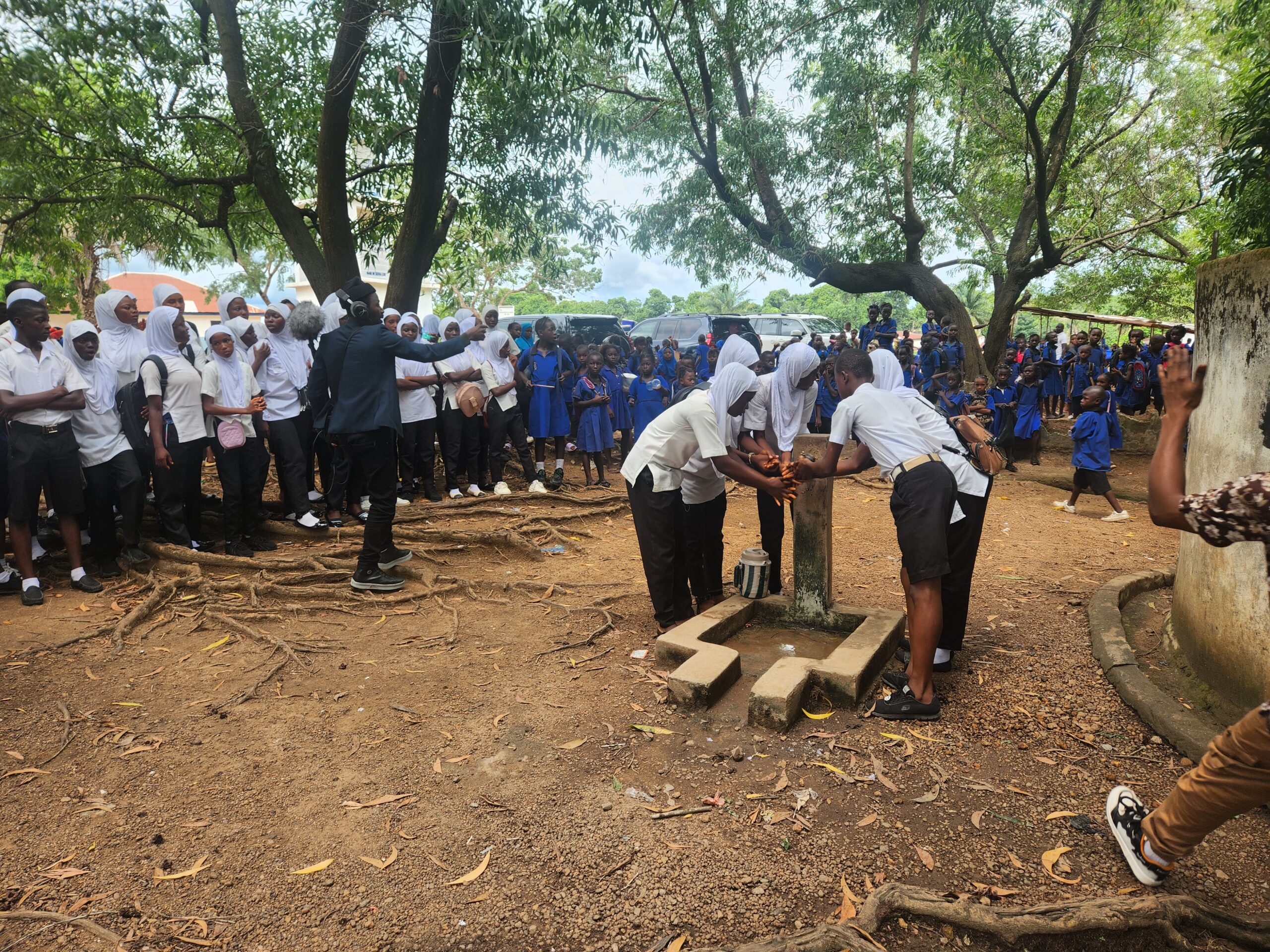
(Above) Pupils washing Hands from the PERSIF Constructed SPWSS tap @ Alharkan
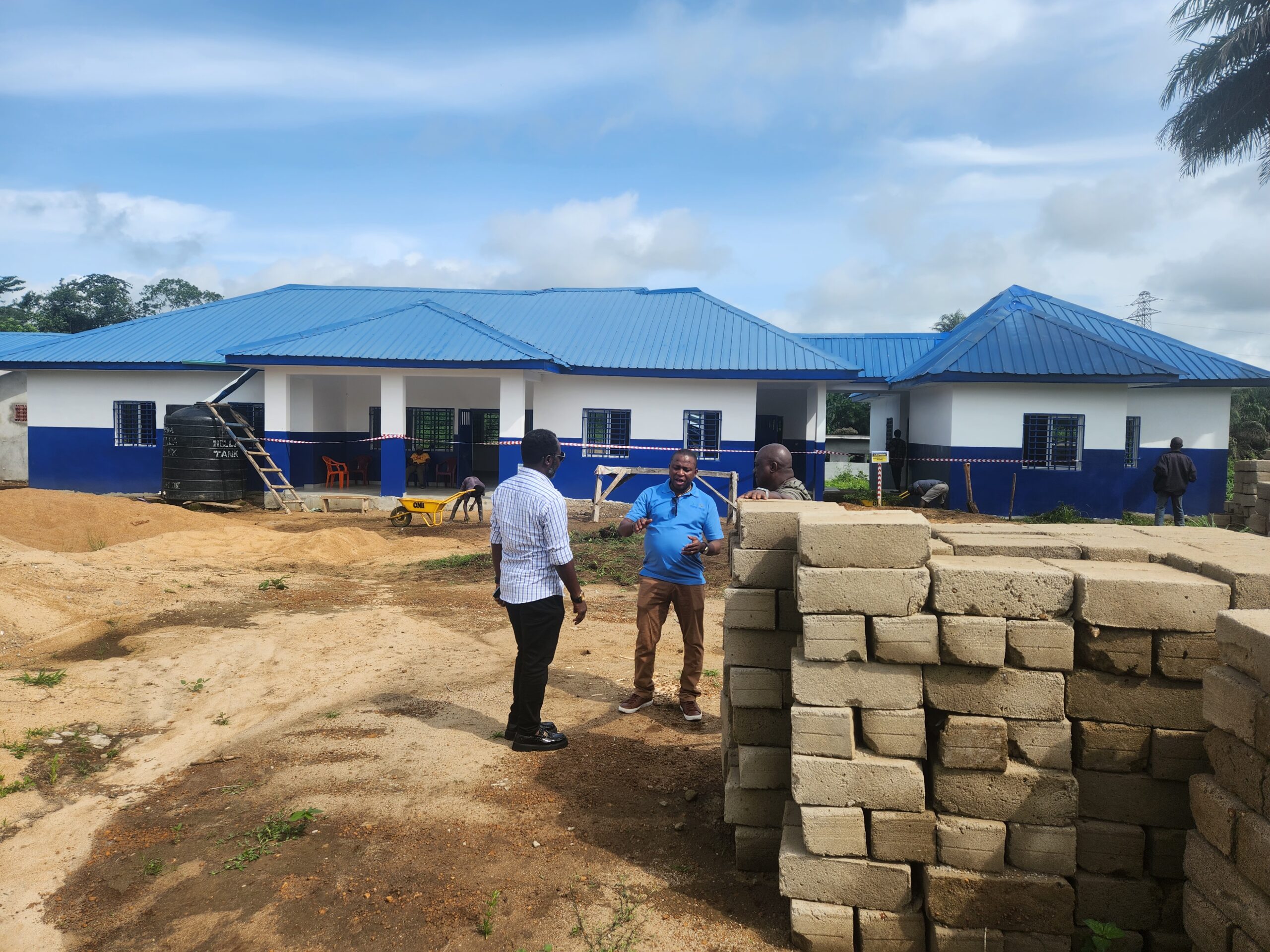 (Above) The Deputy Chief Director of Social Services engages the PERSIF M&E Specialist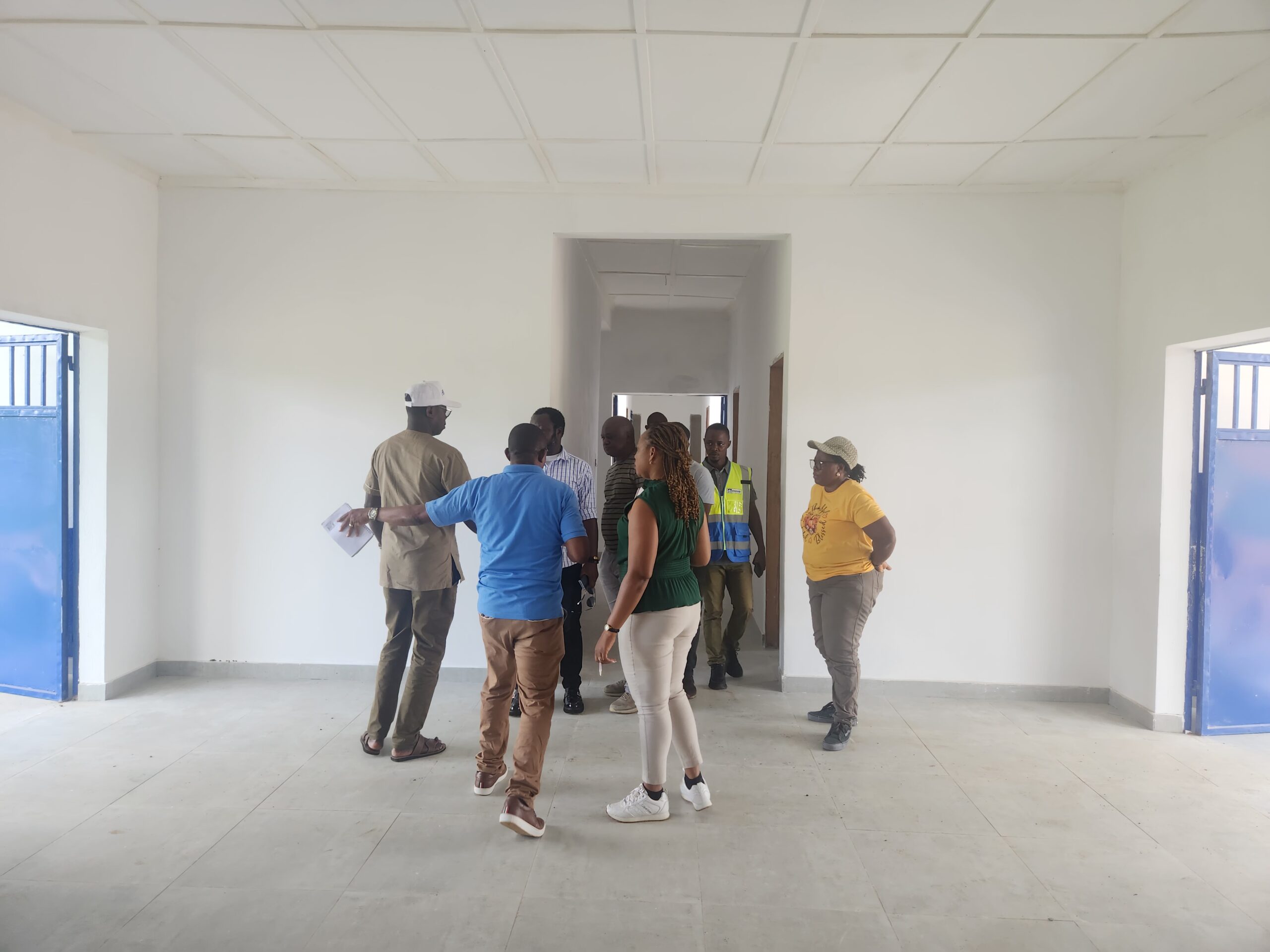
- Published in Events, PERSIF News Update
Progress on Construction of the Mamanki Village, Community Health Center
In the heart of Port Loko District, Mamanki Village is witnessing a transformative milestone with the near completion of its state-of-the-art Community Health Center (CHC).

This modern facility, equipped with reliable electricity, a solar-powered water supply system, and a secure perimeter fence, promises to be a cornerstone of healthcare delivery for the community. Beyond its infrastructure, the CHC symbolizes resilience, serving as a shining example of recovery and growth in a former EVD hotspot. As Mamanki moves forward, this center stands as a testament to the Government’s enduring commitment to building stronger, healthier communities.
- Published in Events, PERSIF News Update
Stakeholders Engagement on the Ownership and Sustainability of PERSIF Project Infrastructure
Today, February 18, 2025, the Ministry of Social Welfare, in collaboration with the Ministry of Health and the Ministry of Water Resources, and Sanitation through the Post Ebola Recovery Social Investment Fund (PERSIF) Project, has successfully concluded a weeks-long training session focused on the ownership and sustainability of PERSIF Infrastructure (i.e Water, Sanitation, and Hygiene (WASH) and Health facilities constructed through the Project) in former Ebola hotspot communities across Sierra Leone. This training session aligns with the project’s upcoming closure, following the completion of the construction of WASH and Health Facilities. The project’s sustainability plan includes empowering community members with the knowledge and skills to take ownership and ensure the long-term sustainability of these facilities.

The training, which brought together a diverse group of stakeholders from beneficiary communities, including key figures such as Paramount Chiefs, Village Heads, City Mayors, District Council Chairmen, Chief Administrators, Health Workers, Teachers, Pump Mechanics, and representatives from the Ministries of Health and Water Resources and Sanitation, took place in Port Loko, Makeni, Kenema, and Kailahun District Headquarters towns respectively.

The primary objective of the training was to enhance the capacity of community members to own, manage, and sustain the PERSIF-constructed facilities independently, without reliance on external support.

The training was conducted by a team of experts, including a Health Practitioner from the Directorate of Primary Health, Ministry of Health, a WASH Engineer from the Ministry of Water Resources and Sanitation, and a representative from the District Council.

Key topics covered during the engagement included but were not limited to the following:
- The Nexus between WASH and Health;
- WASH Management Committee: Formation/Membership and Prerequisites for the Chairperson and Treasurer;
- Health Facility Management Committee: Membership and prerequisites for Chairperson and Treasurer;
- Infection prevention and control;
- Reportable events and Communicable diseases;
- Essential Community-Based Services of CHWs Services package;
- Grievance Redress Mechanism; and
- Roles and Responsibilities: District Councils, Committee Members, Health Workers, and the Community in the Maintenance and Sustainability of WASH and Health Facilities.

The training was divided into two sections: Section 1 was the official Open Courtesies including the welcome address, opening remarks, declaration of Purpose/objective of training, and statements from key stakeholders. Section 2 was the training proper which saw facilitator-led sessions on training modules, group exercises, interactive activities, questions/suggestions and answers, and recommendations for the sustainability of the project infrastructure.

The completion of the training marked a significant step towards ensuring the sustainability and proper management of WASH and Health Facilities in the beneficiary communities. With enhanced capacity and knowledge, community members are now better equipped to maintain and sustain these vital infrastructures, contributing to improved health and well-being in their communities.

- Published in Events, PERSIF News Update
𝐌𝐢𝐧𝐢𝐬𝐭𝐫𝐲 𝐨𝐟 𝐒𝐨𝐜𝐢𝐚𝐥 𝐖𝐞𝐥𝐟𝐚𝐫𝐞 𝐢𝐧 𝐜𝐨𝐥𝐥𝐚𝐛𝐨𝐫𝐚𝐭𝐢𝐨𝐧 𝐰𝐢𝐭𝐡 𝐭𝐡𝐞 𝐌𝐢𝐧𝐢𝐬𝐭𝐫𝐲 𝐨𝐟 𝐇𝐞𝐚𝐥𝐭𝐡 𝐄𝐧𝐠𝐚𝐠𝐞𝐬 𝐒𝐭𝐚𝐤𝐞𝐡𝐨𝐥𝐝𝐞𝐫𝐬 𝐨𝐧 𝐒𝐮𝐬𝐭𝐚𝐢𝐧𝐚𝐛𝐢𝐥𝐢𝐭𝐲 𝐚𝐧𝐝 𝐎𝐰𝐧𝐞𝐫𝐬𝐡𝐢𝐩 𝐨𝐟 𝐏𝐨𝐬𝐭-𝐄𝐛𝐨𝐥𝐚 𝐑𝐞𝐜𝐨𝐯𝐞𝐫𝐲 𝐈𝐧𝐟𝐫𝐚𝐬𝐭𝐫𝐮𝐜𝐭𝐮𝐫𝐞

In a continued effort to ensure the long-term impact of the Post-Ebola Recovery Social Investment Fund (PERSIF) project, the Ministry of Social Welfare, in collaboration with the Ministry of Health, on 6th February 2025 convened key stakeholders at the Freetown City Council to discuss the sustainability and ownership of critical infrastructure constructed under the PERSIF Project.
The engagement brought together the Hon. Minister of Social Welfare, Deputy Minister of Health 1, Chairman of the project steering committee, Paramount Chief Members of Parliament (PCMPs), District Council Chairmen and City Council Mayors, Representatives of the PERSIF Steering Committee, and Partner Ministries Departments and Agencies (MDAs) involved in the recovery process and the African Development Bank.

The engagement had 2 sessions: the first session was the opening ceremony, which included statements from partner ministries. The second session was a panel discussion where partner ministries presented their sustainability plans for the PERSIF project infrastructure.
Delivering the keynote address, the Minister of Social Welfare, Honourable Melrose Karminty stated that the Ebola outbreak that devastated the region several years ago left an indelible mark on the health, social, and economic fabric of the country. In response, the government, through the PERSIF project, invested in constructing infrastructure essential for the socio-economic recovery and resilience building of former Ebola Hotspot communities. These include Community Health Centres, Solarized and non-solarized WASH facilities in communities, schools, and health facilities aimed at mitigating the long-term effects of the epidemic.

Mrs. Karminty commended the donor partners, including the African Development Bank and the Rural Water Supply and Sanitation Initiative, for supporting the ongoing recovery project. She noted that the project has made significant progress with a 73% completion rate.
The Honourable Minister emphasized the importance of sustaining the project, especially after its official closure, to ensure lasting solutions to the country’s critical needs, particularly in health, water, and sanitation. She commended the project for its alignment with the Post-Ebola Recovery Plan and the Government’s Medium-term National Development Plan, focusing on healthcare, sanitation, Human Capital Development, and Women’s Empowerment.
She continued that the project covers eight districts mostly affected by the Ebola crisis and aims to restore essential services while revitalizing local economies. Mrs. Karminty pointed out that the project’s success relies on community ownership and involvement, with a special focus on providing water and sanitation facilities in schools and supporting trade and social workforce development.
In closing, the Honourable Minister expressed gratitude to all stakeholders and called for continued collaboration to ensure the success and long-term sustainability of the project, which is crucial for the recovery and future well-being of Sierra Leone’s people.

The African Development Bank representative, Ms. Mary, speaking on behalf of the country manager, highlighted the bank’s commitment to social and infrastructural development across Africa, focusing on projects that improve life expectancy, food security, survival, integration, and overall quality of life. She said the initiative aligns with the AfDB’s Human Capital Development Strategy, emphasizing sustainable, people-centered approaches. She continued that a key aspect of the project is its support for Sierra Leone’s recovery from the Ebola crisis, specifically enhancing access to healthcare and restoring basic social services in affected communities. Ms. Mary added that ADB is committed to ensuring the new healthcare facilities meet long-term needs by encouraging collaboration among relevant MDAs and the Ministry of Health.
Ms. Mary also outlined a sustainability plan, emphasizing the establishment of Community Management Committees, continued multi-sectoral coordination, posting of qualified health workers, and allocation of long-term resources by the Ministry of Health.
The AfDB’s goal, she said, is to foster inclusivity and accessibility in healthcare, particularly for vulnerable populations such as people with disabilities.
She described the engagement as timely, adding that it reinforced the ADB’s commitment to improving the well-being of Sierra Leone’s citizens, particularly those in remote areas. She is hopeful the initiative will yield positive results for the communities it aims to serve. She emphasized the importance of continued collaboration and stakeholder involvement to ensure the long-term sustainability of the Post-Ebola Recovery Social Investment Fund (PERSIF) project.
- Published in Events, PERSIF News Update